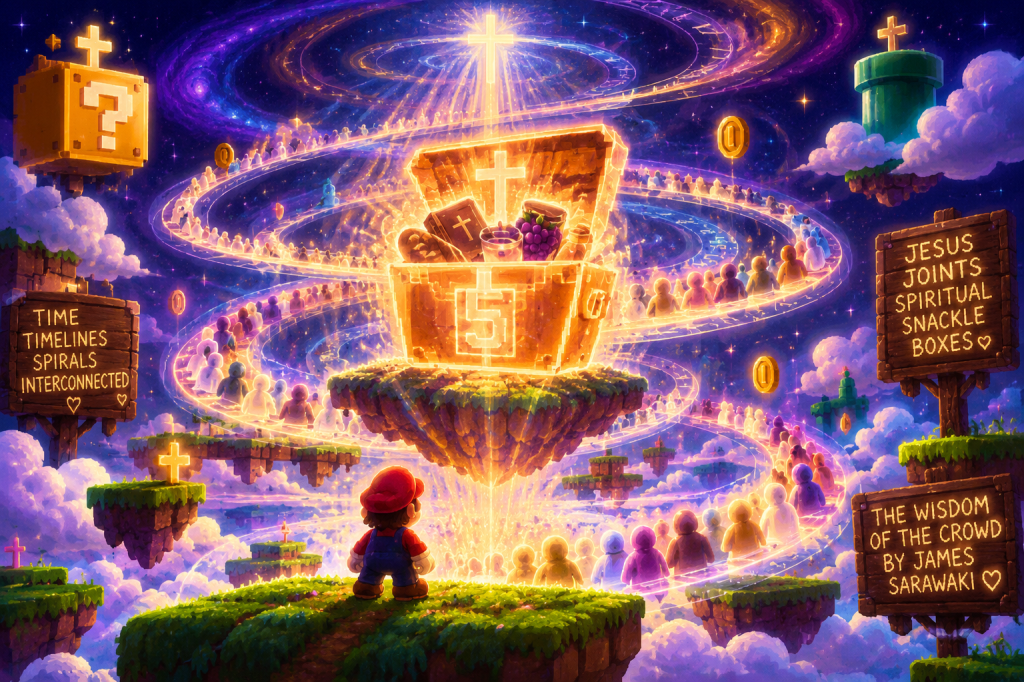
Human relationships often move through mysterious cycles. Across generations, people search for a connection that feels like recognition, a spark that seems to arrive from somewhere deeper than ordinary attraction. It is a moment that feels familiar before it is understood, as though two paths that have been wandering separately suddenly converge. Throughout history, many cultures have described these moments through the language of destiny, divine timing, ancestry, or sacred union. The idea is that certain connections carry a weight beyond the immediate circumstances of two individuals. They seem to touch something older, something carried through family lines, traditions, and collective memory. Yet the human experience is complicated by the space between recognition and realization. A person can encounter something profound and still choose what is familiar. This is one of the great paradoxes of being human. We often reach toward what feels safe before we reach toward what allows us to grow. The heart may recognize possibility, but the mind often seeks certainty. The familiar has gravity. It pulls us toward old patterns, old beliefs, and old definitions of love. Sometimes we return to the same emotional landscapes again and again, hoping that a different outcome will emerge from the same foundation. We may mistake familiarity for alignment because the path is already marked. We know where the turns are. We know where the pain lives. We know how to survive there. But survival and fulfillment are not always the same destination. Many people carry invisible agreements passed down through generations. These agreements may come from family, culture, faith, or ancestral stories. They shape what we believe love should look like, what commitment should require, and what sacrifices are considered noble. These inherited patterns can contain great wisdom, but they can also contain unfinished lessons waiting for someone brave enough to examine them. Lineage is not only about what we receive. It is also about what we transform. The convergence of ancestry, spirituality, and human relationship creates a powerful question: Are we repeating what came before us, or are we honoring it by evolving beyond it? For those who feel connected to deep traditions, such as the spiritual heritage carried through English and Irish Catholic ancestry, there can be a profound awareness that some bonds seem to exist beyond legal structures and human declarations. Institutions create frameworks, ceremonies, and agreements, but the human spirit has always searched for something beyond paperwork. It searches for meaning, recognition, and a sense that two lives have entered into a deeper conversation with creation itself. The challenge is that humans often confuse the container with the essence. A marriage certificate does not create love. A ceremony does not create devotion. A title does not create a sacred bond. These things can honor and protect what already exists, but they cannot manufacture the invisible thread that connects two souls. At the same time, intensity alone is not proof of destiny. A spark can illuminate a room, but it can also burn through the very thing it touches if it is not accompanied by wisdom, compassion, and responsibility.The deeper question is not simply, “Who makes me feel something?”The deeper question is, “Who helps me become more fully who I was created to be?”The highest form of connection does not diminish either person. It expands them. It invites honesty where there was avoidance, healing where there was pain, and courage where there was fear. It does not ask someone to abandon themselves. It calls them into greater alignment with themselves. Perhaps the reason humans repeatedly choose the lower possibility is not that they are incapable of recognizing the higher one. Perhaps it is because the higher possibility demands transformation. Growth requires releasing identities that once protected us. It requires facing the parts of ourselves shaped by fear, disappointment, and inherited expectations. It requires the willingness to step beyond the boundaries of the reality we know, and into one we have not yet learned how to navigate. The unknown can feel like a threat even when it is an invitation. Every generation stands at this threshold. We inherit stories, but we are also authors. We receive the past, but we are not required to become prisoners of it. We carry the blessings of those who came before us, while also carrying the responsibility to heal what they could not. The convergence of two people, two lineages, or two paths is not only about finding another person. It is about discovering what becomes possible when the past and the future meet in the present moment. The sacred is not found only in what is familiar. Sometimes it is found in the courage to recognize what has always been waiting for us beyond the familiar. -BH


Leave a comment